

Define the handoff point
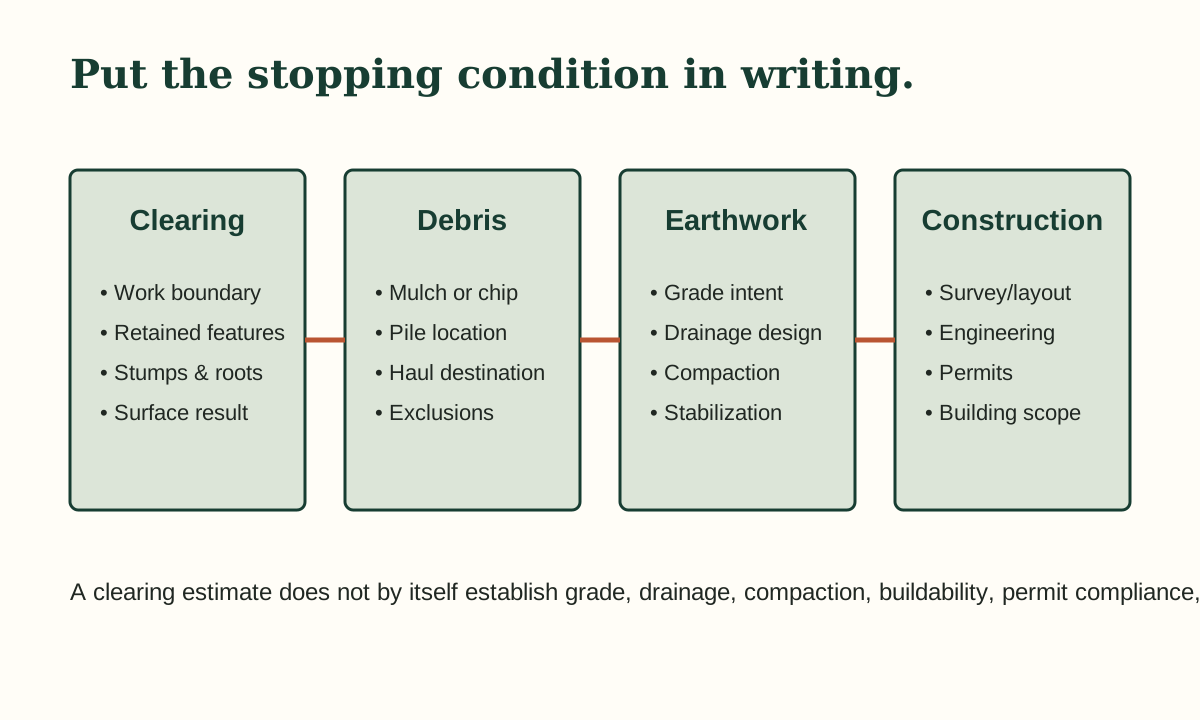
A clearing provider may remove or process vegetation without taking responsibility for engineered grade, drainage design, soil suitability, compaction, erosion controls, or building layout. Ask the proposal to state the stopping condition.
If a builder, civil engineer, surveyor, septic professional, utility, or permitting authority is involved, align their requirements before work removes evidence or changes site access.
Record known constraints before pricing
Known structures, wells, tanks, utilities, easements, steep areas, soft ground, drainage paths, fill, dumped material, and possible wet areas belong in the project description. A homeowner observation is not a professional determination, but it can flag the need for review.
Do not rely on this site or a generic provider match to decide a boundary, wetland, flood, stormwater, or permit question.
Compare proposals phase by phase
Ask each bidder to identify mobilization, clearing method, retained vegetation protection, stump treatment, debris destination, rough cleanup, stabilization, exclusions, change-order triggers, and any third-party work.
Price comparisons are useful only when the scopes are comparable. A lower total may simply omit hauling, stump work, access repair, or later grading.
Use the visual worksheet
Swipe or scroll the diagram horizontally to read every column.
Questions property owners ask
Is rough grading the same as final grading?
Not necessarily. Ask each provider to define the tolerances, drainage assumptions, compaction, material handling, and finished condition.
Who verifies a building area?
That depends on the project. Coordinate with the appropriate survey, design, engineering, building, and permitting professionals.
Does this site review plans?
No. It publishes planning guidance and manages accepted requests. Each request goes to one qualified provider at a time, with follow-up and next-provider fallback if contact did not happen.